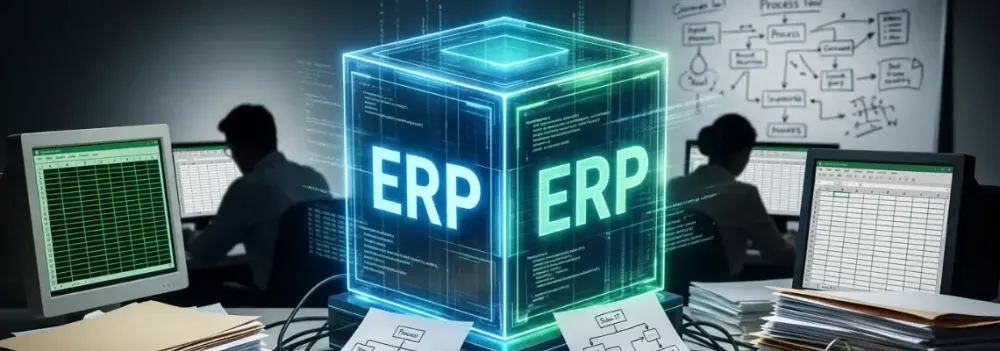
The ERP Trap: Why Your "Go-Live" Is Actually a "Go-Back"
Is your ERP just an expensive filing cabinet? Learn why "Go-Live" is only the start and how to stop employees from retreating to spreadsheets and manual workarounds.
The champagne is finished. The "Go-Live" emails have been sent. The consultants have rolled off the project. On paper, you have successfully digitally transformed your organization.
But if you walk through your office or join a screen-share today, you’ll likely find a quiet, expensive rebellion taking place. Behind the sleek interface of your new ERP, your team is likely retreating to the "Shadow IT" that keeps them comfortable: the spreadsheet.
The Illusion of Delivery
Most ERP programs are managed as technical projects. The goal is "Delivery"—installing the software, migrating the data, and hitting a launch date. This is where leadership often makes its most expensive mistake: thinking the job is done. When you measure success on delivery, you are measuring the arrival of a tool. But a tool does not create value; behavioral change does.
Where the System Breaks: The Rise of Workarounds
The moment a user finds the new system "too rigid" or "too slow," they create a workaround.
A spreadsheet to track inventory because the ERP feels complex.
A manual log for production because the "old way" was faster.
Side-emails for approvals because the system’s workflow is "clunky."
Slowly, the ERP stops being the "Single Source of Truth" and becomes just another expensive data entry task. People enter data into the ERP to satisfy management, but they run the business on their spreadsheets.
The Real Metric: Adoption over Installation
The best ERP programs are not measured on whether the software works, but on whether the people have changed. If your leadership team stops paying attention after the Go-Live, the organizational gravity will pull your employees back to their old habits. Real adoption is a marathon that starts after the technical finish line. It requires:
Relentless Post-Live Support: Not just fixing bugs, but refining processes to match reality.
Visible Leadership Usage: If the CEO isn’t looking at the ERP’s dashboard, the managers won't either.
Auditing Workarounds: Actively identifying and "killing" the spreadsheets that compete with the system.
The Bottom Line
An ERP is a change management project disguised as a software installation. If you measure success by the "Go-Live" date, you have merely bought a tool. If you measure it by the elimination of manual workarounds and the shift in daily habits, you have bought a transformation.
Don't let your investment become a $100,000 filing cabinet. The real work begins now.
More from Galoper Insights

March 12, 2026
Resilience is Infrastructure: Why Data is Your Best Defense in Times of Conflict
February 16, 2026
The Silent Killer of Digital Transformation: Why Skipping "Phase 0" Will Ruin Your ERP Implementation
February 3, 2026