🤖 AI in ERP: The Hype vs. The Reality Check
The Truth: AI Doesn't Fix Chaos
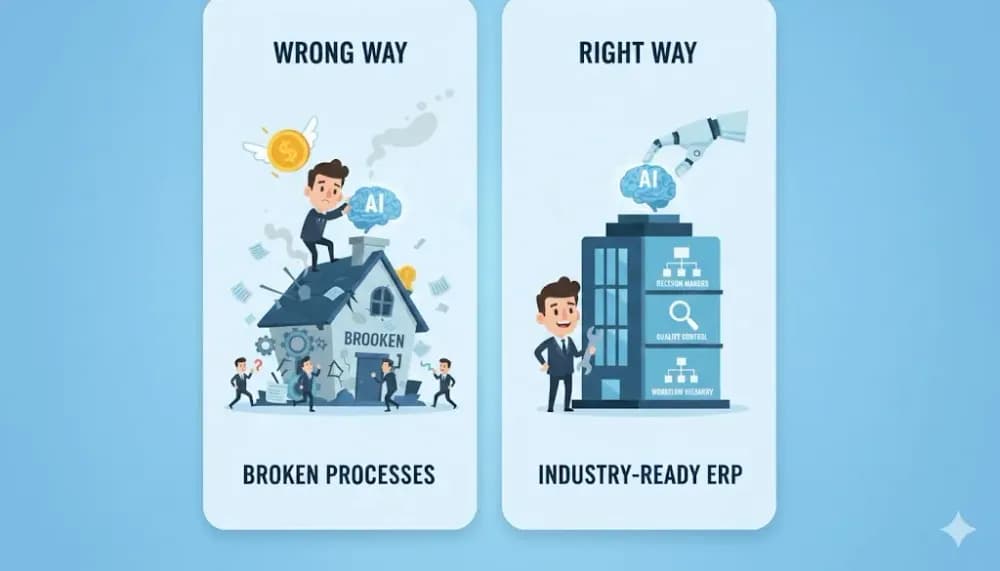
Stop Putting a Rocket Engine on a Car with No Steering Wheel
The buzz is undeniable. Every CEO, CTO, and business owner wants to talk about Artificial Intelligence (AI). They want it embedded in their Enterprise Resource Planning (ERP) system, and for good reason; the potential to automate decisions, predict trends, and optimize costs is incredible.
But before we chase the future, let's pause for a moment and ask a crucial, foundational question: Before we inject AI, do we even have eligible, well-defined business processes that truly match how our industry should work?
The Truth: AI Doesn't Fix Chaos
There is a fundamental misconception in the market: that AI is a magic wand that can fix poor business performance, undefined roles, or broken workflows. The stark reality is that implementing AI into a chaotic, undefined, or broken process isn't magic; it’s a fast track to wasting money and optimizing inefficiency. AI is designed to learn from and execute based on the data and processes it is given. If your processes are flawed, inconsistent, or non-existent, AI will simply execute the flaws faster and more broadly.
The Crucial Foundation: Basics Before Algorithms
Some things are simply more critical than advanced algorithms when you are building a solid, scalable ERP foundation. These are the elements that must be firmly in place before you even consider an AI integration project:
1. Clear Decision-Making Hierarchy: Before AI can recommend a decision, the human chain of command must be ironed out, Ask: Who is responsible for what decision point in your operations? Is it clear who approves a large purchase, a new vendor, or a change in pricing strategy?
The Risk: Without clear ownership, AI-generated recommendations (like predictive maintenance or optimized procurement) will stall in a decision paralysis loop.
2. Robust Quality Control (QC): If your input data is inconsistent, the AI's output will be useless. AI systems depend on high-quality, standardized data formats. Ask: What are your checks and balances to ensure consistent data quality and output? Do you have proper validation steps for inventory entries, sales classifications, and financial records?
The Risk: If your data is "garbage in," AI will simply deliver "garbage out" at an exponential speed.
3. Transparent Workflow Hierarchy; Everyone in the organization must understand their role and the flow of work from start to finish. Ask: Is everyone clear on the flow of work, responsibilities, and reporting lines for core processes like Order-to-Cash or Procure-to-Pay?
The Risk: AI may try to automate a step that a human expects to manually review, leading to process friction, missed steps, and employee distrust in the system.
Prioritize Process, Then Power
For businesses, especially in the Lebanese and regional markets, the immediate priority should be achieving process maturity. This means: Defining and Documenting: Clearly map out every mission-critical business process, ensuring it aligns with industry best practices.
Standardization: Implement tools (like GaloperERP) that enforce these standard processes across all departments.
Efficiency: Run the standardized system and collect clean, reliable data.
Once that foundation is solid, once the car has a steering wheel, good tires, and a clear path then AI can truly become the transformative powerhouse it's meant to be. It will be optimizing an efficient, well-oiled machine, leading to real returns on investment.